Open Top Tuck Bottom Boxes: Display Formats and Board Choice
An open top tuck bottom carton works as a counter dispenser, a tray under a clear sleeve, or a desk organiser. How structure and board are chosen.

Overview
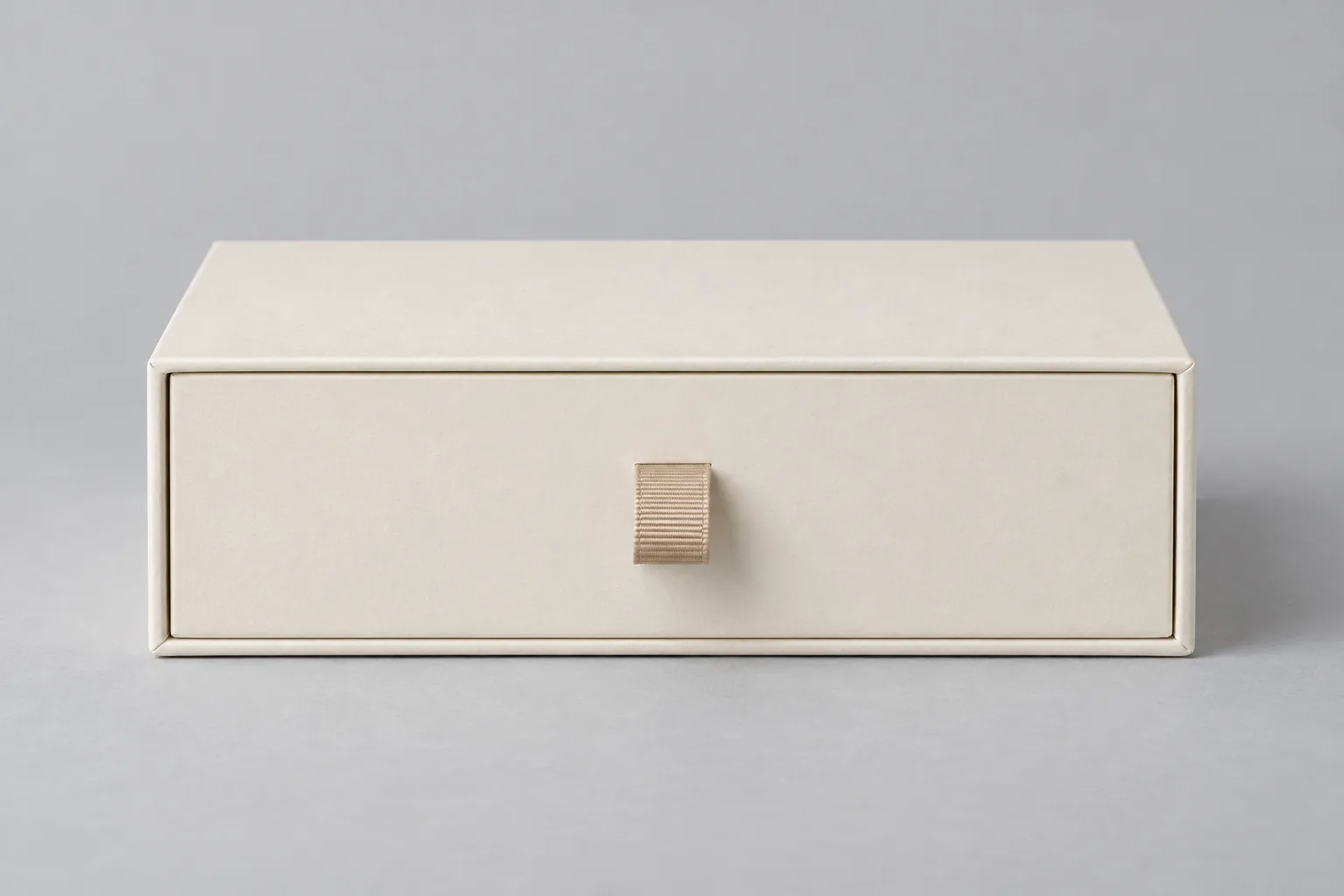
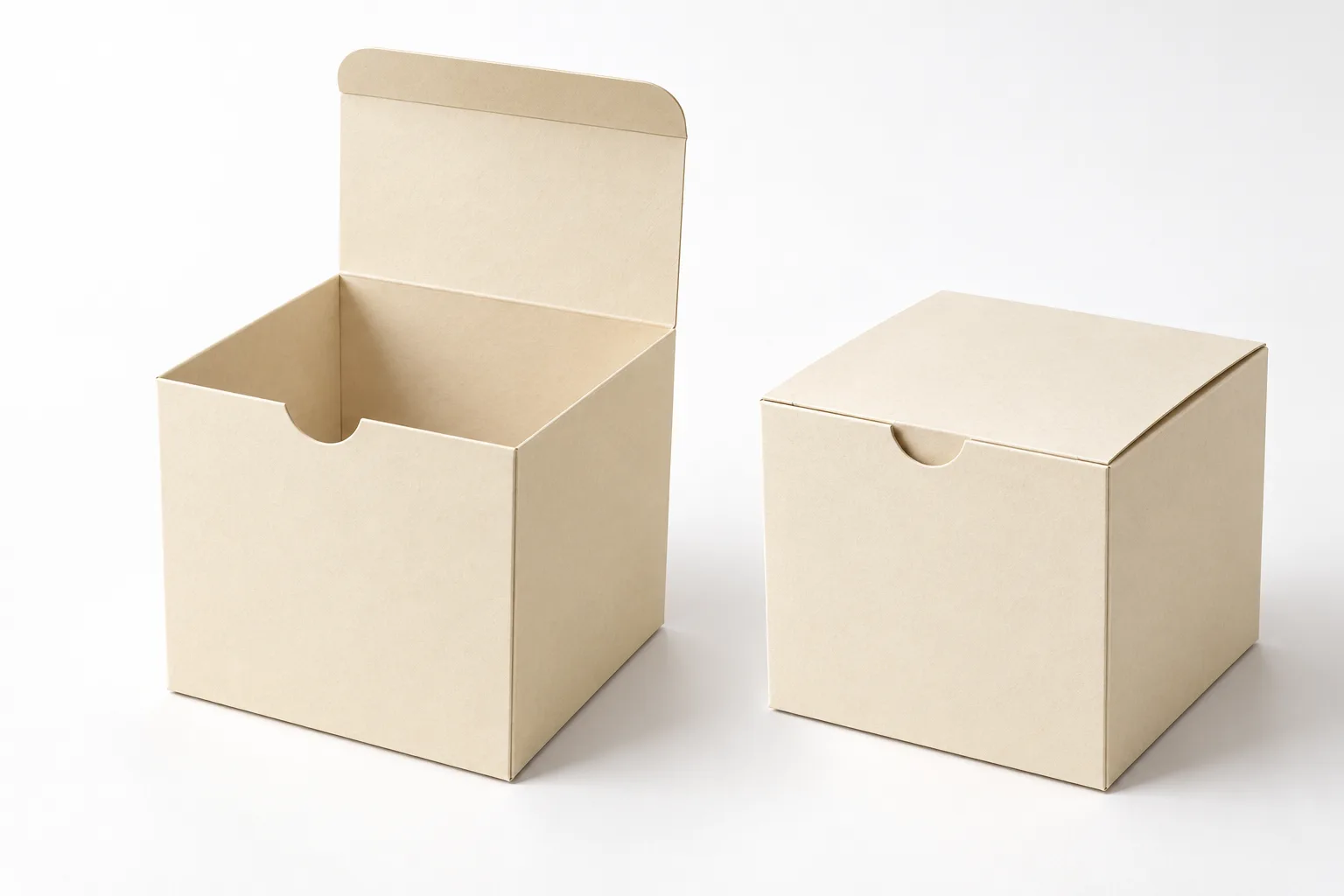
An open top tuck bottom (OTTB) carton, also called an open top tuck bottom sleeve, dispenser box or bin box, has no top closure. The upper rim is open, so the product is visible and reachable, while the bottom closes with a standard tuck.
- Open top: no tuck or dust flaps at the top, which speeds loading and lets the pack work as a dispenser.
- Tuck bottom: a friction tuck, or a tuck with slit locks where the load is heavier.
- Dual role: used alone as a counter display or organiser, or as the base tray of a two-piece set under a clear sleeve.
Where it is used
- Point of purchase: countertop gravity feeders, tea bag and sugar packet dispensers, sample caddies.
- Two-piece sets: the structural base of a slipcase or rigid gift set, with an acetate sleeve over it.
- Desk and counter organisers: pen cups, brush holders, bins for small impulse items.
- Shelf bins: hardware parts bins and pharmacy shelf trays.
Structure and variations
- Raw top edge: cut flush along the score. The cheapest option, but the cut edge of the board stays visible.
- Rolled top rim: a fold-over collar of 10 to 25 mm glued or snapped inward, which hides the raw edge and stiffens the rim against repeated handling.
- Slanted front: the front panel trimmed lower than the rear, with the sides sloping forward, so the contents show more clearly.
- Bottom lock: a standard tuck for light contents around 0.5 kg and below, or a 1-2-3 snap lock where the box holds bottles or loose items.
Board choice
Without top dust flaps the tube has less torsional rigidity, so the board has to carry more of the structure.
- SBS, 18 to 28 pt (about 360 to 550 gsm): high-end cosmetic displays, sample caddies and gift bases.
- FBB or CUK, 18 to 26 pt (350 to 500 gsm): retail counters and OTC pharmacy packets.
- E-flute, about 1.5 mm: heavier counter displays, hardware bins, jars and bottles.
- F-flute or N-flute, about 0.8 to 1.0 mm: crisp micro-flute for premium print and rigid display walls.
Sizing
Size is written as length x width x depth: length across the front opening, width front to back, depth from the bottom score to the top rim.
- Blank width = 2 x length + 2 x width + glue tab + crease take-up allowance.
- Blank height = depth + width + tuck length + rim hem allowance if the top is folded over.
Production notes
- If the top edge stays cut flush, check the die ejection rubbers so the rim does not flake.
- Run board grain vertically, parallel to the corner creases, so the walls do not bulge when the box is filled.
- Specify slit locks on the bottom tuck once contents go above roughly 300 g, otherwise the base can release when the box is lifted.
- For display use, consider printing both sides, so the visible interior walls carry the same brand colour as the outside.
- Test the dispenser opening with the actual product. A packet that drops too freely empties onto the counter, and one that binds defeats the purpose.
Related specifications
- Half slotted containers: the corrugated open-top case for shipping the same display bins.
- Open end sleeve packaging: the sleeve that turns this tray into a closed pack.
- Straight tuck end cartons: the tuck mechanics behind the bottom closure.
About this guide
Written and reviewed by the pkgoutside Editorial Team, which covers printing, packaging materials, formats and sourcing. Guides draw on supplier specifications, published industry standards and the questions buyers ask on pkgoutside. Specifications vary by supplier and market, so confirm the final material, certificates and samples with your supplier before ordering.
- Written by:
- pkgoutsideEditorial Team — packaging and print sourcing coverage
- Technical review:
- Cross-checked against the standards listed below
- Figures:
- Typical ranges for the material and process described, not a specification
- Last reviewed:
- 2026-11-02
Standards & references
The figures, test methods and compliance terms cited in this guide follow the published standards below. Editions and applicability vary by material, market and supplier, so confirm the current edition and the exact grade or specification with your supplier or test laboratory before ordering.
ISO 780:2015 — Packaging — pictorial marking for handling of goods
Standard handling symbols applied to cartons and pallets.
ASTM D4169 — Performance testing of shipping containers and systems
Distribution cycles defined by drop height, compression load and vibration profile.
ISTA 3A — Packaged products for parcel delivery system shipment
Parcel-shipment test sequence covering drops, vibration and compression levels.
TAPPI T811 — Edgewise compressive strength of corrugated fiberboard (short column test)
Edge crush test value (ECT, kN/m), an input to box compression estimates.
ISO 12048:1994 — Packaging — complete, filled transport packages — compression and stacking tests
Box compression and stacking load (N) for palletised and warehouse loads.
Source: https://pkgoutside.com/insights/open-top-tuck-bottom-box-specification ·pkgoutside — printing and packaging B2B marketplace. Export or archive this copy together with the URL above so readers can trace the original guide and its current version.
Related reading: Paperisation of Packaging: Designing Fibre-Based Packs That Repulp, EU PPWR Compliance: A Packaging Buyer's Document and Design Checklist, Mono-Material Flexible Packaging: Designing Packs That Recyclers Accept
More guides

Paperisation of Packaging: Designing Fibre-Based Packs That Repulp

EU PPWR Compliance: A Packaging Buyer's Document and Design Checklist

Mono-Material Flexible Packaging: Designing Packs That Recyclers Accept
More in Packaging Formats
View all in Packaging Formats
Tapered Tuck-Lock Carton: Technical Specification Guide
How tapered tuck-lock cartons are drawn, locked and tooled: draft angles, panel formulas, lock ears, dieline layers and board grades.
BypkgoutsideEditorial TeamUpdated 2026-11-05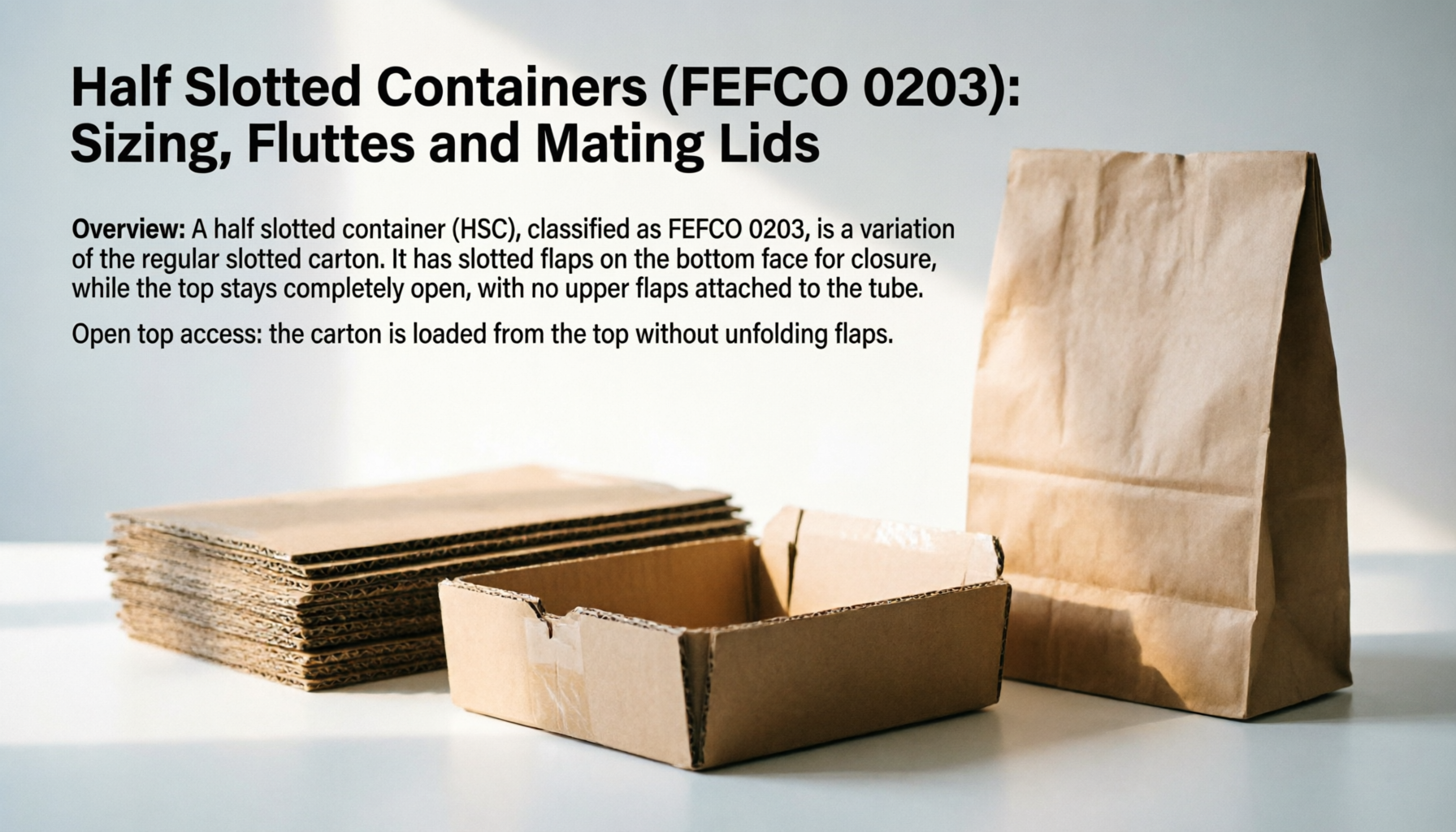
Half Slotted Containers (FEFCO 0203): Sizing and Lids
An HSC closes at the bottom and stays open at the top. Used with a cap or as a bin, it saves board and tooling against a regular slotted carton.
BypkgoutsideEditorial TeamUpdated 2026-11-02
Straight Tuck End Cartons: Flaps and Board Grades
Straight tuck end cartons keep the front face unbroken. Standard allowances, closure options and dieline checks that decide whether the pack runs cleanly.
BypkgoutsideEditorial TeamUpdated 2026-11-02