Rigid Box Types: Cardboard Set-Up Box Styles for Premium Packs
Rigid box styles from neck boxes to magnetic closures and collapsible formats, with board cores, inserts, finishes, freight and testing notes for buyers.

A rigid box, also called a set-up box, is built around a core of grey board that is cut, cornered and wrapped in printed or textured paper. Unlike a folding carton, it is not folded from a single flat blank: it is assembled, so it holds a sharp edge, keeps its shape on a shelf and gives the deliberate, weighted opening that premium products rely on. Electronics, cosmetics, spirits, tea, jewellery, confectionery gift sets and corporate gifts are its natural territory.
The trade-off is freight and cost. An assembled box takes volume, so a light product in a large rigid box can pay more for packaging logistics than for packaging material. This guide catalogues the constructions in commercial use, the materials that decide their feel, and the questions that keep a premium pack from becoming an expensive mistake.
The four decisions inside every rigid box
- The construction: how the lid meets the base, and how the box is opened.
- The board core: grey board thickness, which sets weight and edge sharpness.
- The wrap and liner: what the buyer sees and touches, and where most of the cost sits.
- The insert: how the product is held, and whether it survives transit.
Board cores and wraps
- Grey board 1.0 to 1.5 mm: light rigid boxes, small jewellery and cosmetic cartons. Cheaper, less sharp on the edge.
- Grey board 2.0 mm: the default for most gift, cosmetic and electronics boxes, balancing weight and rigidity.
- Grey board 2.5 to 3.0 mm: spirits, tea chests, heavy gift sets and boxes intended to be kept.
- Wrapping paper 100 to 157 gsm art paper: the standard printed wrap, accepts foil, embossing and spot UV.
- Textured and speciality papers: tactile uncoated stocks, linen and leatherette effects for a softer premium feel.
- Cloth, PU leather and velvet wraps: high-end presentation, higher cost, longer lead time.
- Liners: printed paper, flocked velvet, satin, EVA foam, moulded pulp or thermoformed PET.
Dimensions behave differently from folding cartons. The interior size must be set first, then board thickness, wrap thickness and lid clearance (typically 1.5 to 2 mm) are added, which is why a rigid box quoted from outside dimensions usually ends up either too tight or too loose.
Rigid box constructions in commercial use
Two-piece lid and base (telescope)

The base holds the product and the lid slides down over it. It is the most common and most economical rigid construction, available at any size, and it opens with a simple lift. Used for apparel, gifts, candles, small appliances and confectionery.
Neck box (shoulder box)

The lid sits on an inner neck that is slightly smaller than the base, so the lid stops at a fixed line instead of sliding all the way down. It gives a clean reveal line and a more desirable opening than a plain telescope, at the cost of an extra assembled part. The standard for cosmetics, skincare and premium gift sets.
Hinged lid box (book-style)

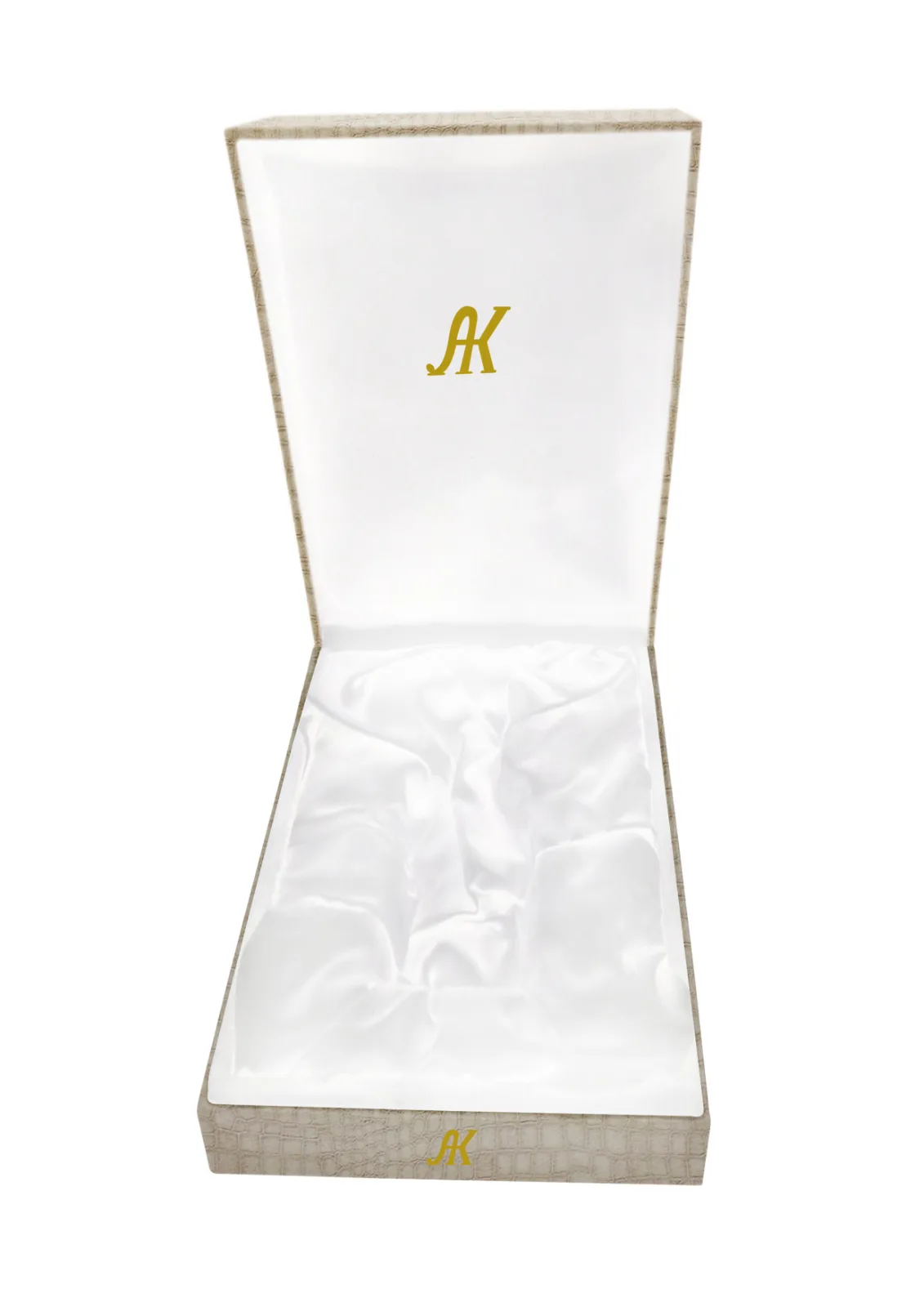
The lid is attached along one edge and folds open like a book, often with a ribbon stay to hold it at an angle. It presents the product the moment it is opened, and it is used for watches, pens, spirits, corporate gifts and boxed sets.
Magnetic closure box

A book-style construction with hidden magnets that pull the lid shut. It is the most requested premium format for electronics, wine and gift packaging, and the magnet placement must be specified with the board thickness to avoid a stiff or weak close.
Magnetic book box with inner tray

The same closure with a lift-out tray or a printed platform. Common where the product sits in a presentation layer and paperwork or accessories sit underneath.
Drawer or slide-out box

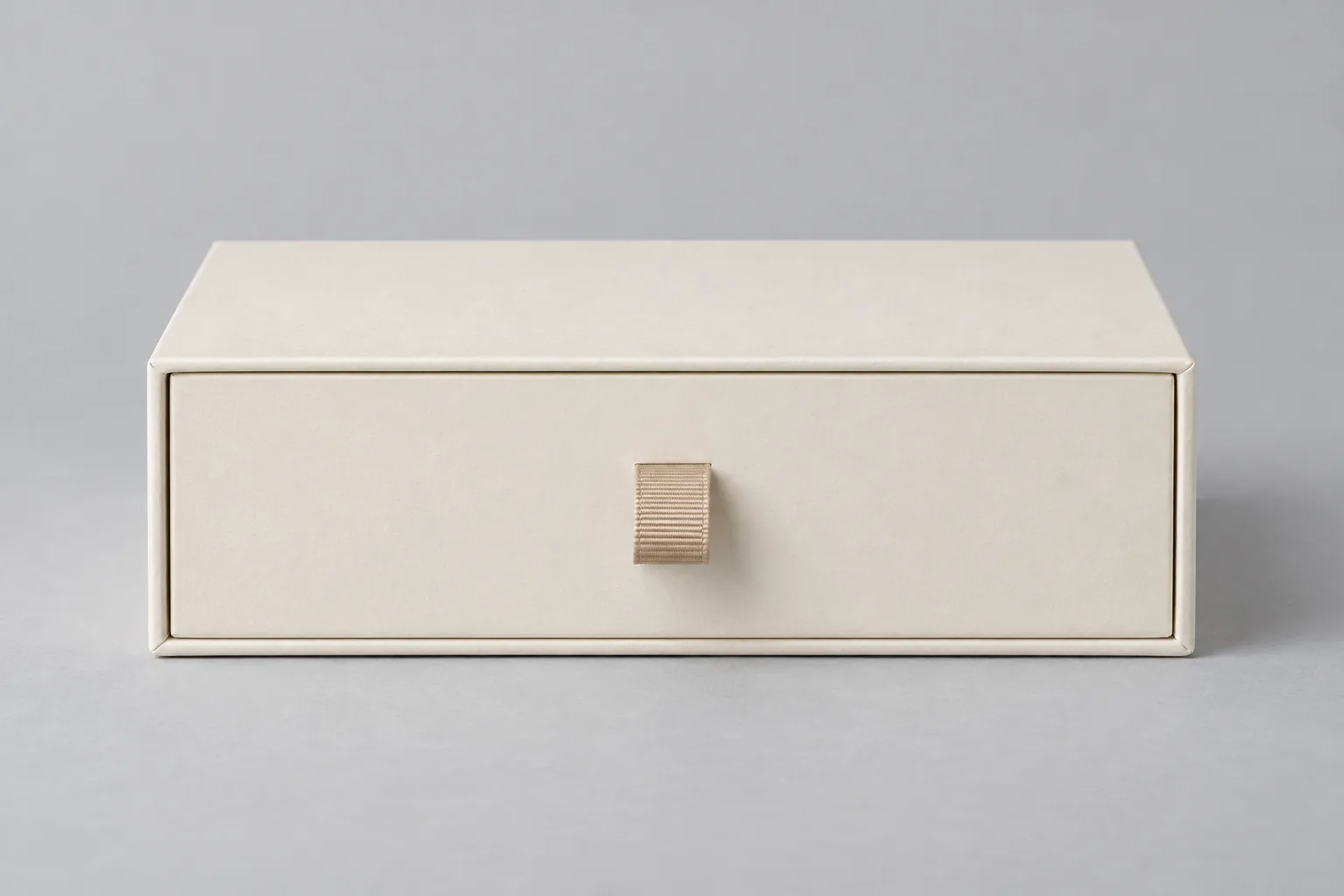
An outer sleeve with an inner drawer, usually with a ribbon pull. The drawer action reads as premium and works well for chocolate, tea, jewellery and small accessories. Clearance between sleeve and drawer is the usual failure point in sampling.
Clamshell

A single-piece construction hinged along one edge, opening like a shell. Fewer parts and lower assembly cost than a lidded box, used for watches, jewellery, tools and promotional kits.
Round, oval and hat boxes

Cylindrical and elliptical boxes with wrapped walls and rolled or flat rims. Common for hats, cakes, flowers, candles and gift sets. Tooling and hand assembly make them more expensive per unit than rectangular boxes of similar volume.
Composite can and tube with metal or plastic ends

A wound tube with metal, plastic or board ends, used for spirits, tea, powdered drink and cosmetics. The barrier comes from the tube and end materials, not the board, so it suits products needing aroma or moisture protection.
Hexagonal and octagonal boxes

Multi-sided constructions with a strong shelf silhouette, used for tea, moon cakes, chocolate and premium gifts. Assembly time and wrap waste are both higher.
Wallet and envelope boxes

Shallow, fold-flat rigid boxes with a magnetic flap, used for gift cards, jewellery, ties and small accessories. They ship flat, which makes them attractive when freight volume is the constraint.
Book-shaped box

A rigid box made to look like a hardback book, sometimes with printed page edges. Used for premium gifts, spirits and commemorative sets.
Window rigid box

A rigid box with a die-cut opening covered by PET or a printed acetate sheet, so the product is visible while the box stays closed. Adds a cutting and gluing step but improves shelf conversion.
Wine and spirits box

A tall rigid box with a neck cut-out, a bottle-shaped insert and often a hinged or magnetic lid. Structural details such as the shoulder cut and the insert cradle decide whether the bottle is held firmly in transit.
Tea chest and compartment box

A rigid box with dividers, trays or multiple compartments, used for tea, coffee, chocolate assortments and hamper sets. Compartment layout drives tooling and assembly time.
Jewellery box with hinged tray

A small rigid box with a hinged insert tray, ring rolls or slots and a flocked liner. The insert is usually the most expensive element per unit of volume.
Collapsible rigid box

A rigid-feel box that folds flat for shipping and pops open for use, using a hinged board or a fabric spine. It cuts freight dramatically and is now common for e-commerce gift packaging, though the edge sharpness and rigidity are slightly below a fully assembled box.
Handbag and suitcase style boxes

Rigid boxes with handles, clasps or corner protectors, made to be carried and reused. Popular for cosmetics, gift sets and promotional kits.
Mono-carton rigid box

A single-piece rigid box with an integrated flip lid, used where a two-piece box would be too tall or too costly. Assembly is simpler, opening is one motion.
Six-corner collapsible magnetic box
A rigid box that folds flat and forms six panels when opened, with magnets holding the lid. It ships flat, which cuts freight, and assembles in seconds at the packer. Widely used for e-commerce gift packaging and subscription boxes.

Flip-top magnetic flap box
A rigid box whose lid flap folds back and holds via magnets, leaving the box open for display. Used for cosmetics, electronics and gift sets where the product should stay visible after the unboxing.

Slipcase with drawer
A rigid slipcase holding a drawer or a book-style insert, used for premium sets, spirits and limited editions. The slipcase adds a second opening motion and a second assembly step, which shows up in the unit price.

Rigid chest with hinged lid and clasp
A deep rigid box with a hinged lid and a metal clasp or lock, used for tools, instruments, tea and collectors' items. The clasp, hinge and corner reinforcement decide whether it survives repeated use.

Pen and pencil presentation box
A slim rigid box with a foam or flocked insert, often with a hinged or sliding lid, used for pens, instruments and small tools. Insert tolerances are tight, so the product drawing has to be shared before the sample is made.

Cigar-style hinged box
A shallow, long rigid box with a hinged lid and a snug fit, used for cigars, chocolate bars and long confectionery. The lid fit and the interior lining carry most of the perceived quality.

Perfume shoulder box with ribbon
A neck box with a ribbon pull and a fitted insert, used for fragrance and skincare. Neck depth, ribbon position and insert clearance are the three dimensions that decide whether the bottle sits straight.

Rigid tube with paper ends
A wound or rolled rigid tube with crimped or paper ends, used for prints, tea, cosmetics and small gifts. It costs less than a composite can but offers less barrier, so it suits dry goods.

Dome and arch rigid box
A rigid box with a curved lid, used for gift sets and premium confectionery. The curved wrap needs a skilled hand and a heavier paper, so the unit price is materially higher than a flat lid of the same footprint.

Rigid bag-style box with rope handle
A rigid box shaped like a shopping bag with a rope or ribbon handle, used for premium retail and gifting. The handle anchor has to be reinforced, because it carries the full weight of the contents.

Inserts and how they change the brief
- EVA foam, die-cut or laminated: firm hold, clean look, standard for electronics and tools.
- Thermoformed PET or rPET: precise cavities, excellent presentation, higher tooling cost.
- Moulded pulp: fibre-based and recyclable, softer detail, growing in eco-positioned gift packs.
- Paperboard platform or folded fitment: cheapest, adequate for light products.
- Flocked or velvet-covered inserts: jewellery and watches, tactile and premium.
- Satin pillows and ribbon pulls: presentation layers above a foam base.
The insert is where transit protection is won or lost, so specify the drop height and the product weight before choosing the material.
Surface finishes that carry the price
- Hot foil stamping for metallic logos, available in gold, silver, copper and coloured foils.
- Embossing and debossing for tactile branding, best on textured wraps.
- Spot UV over matte lamination for contrast between gloss and soft-touch areas.
- Soft-touch lamination for a velvety hand feel, common on cosmetics and electronics.
- Screen print and digital print for short runs without plate costs.
- Edge painting or edge wrapping for a finished look on exposed board edges.
Each finish is a separate pass, and several finishes on the same panel can cost more than the box itself at low volumes.
Tests and standards worth naming
- ISO 536 and ISO 534 for the board grammage and thickness, so the core is verified.
- Compression and stacking checks on the finished box when it is palletised.
- ISTA 3A or ASTM D4169 for parcel and distribution simulation on the filled pack.
- Drop tests with the actual product and insert, not a dummy weight.
- Colour and finish approval on a production sample, not a digital proof.
- FSC chain of custody where paper claims are made, and recyclability review where mixed materials are used.
What drives the price
- Board thickness and box size, which set material and wrap area.
- Wrap material: printed art paper is the cheapest, cloth and leatherette the most expensive.
- Assembly labour, which is hand work and rises with panel count, rims and compartments.
- Insert type: folded board is cheap, thermoformed PET and flocked EVA are not.
- Surface finishing: each foil, emboss or UV pass adds tooling and hand time.
- Volume: most factories start at 500 to 1,000 pieces, and unit price falls steeply to 10,000.
- Freight: assembled boxes ship in volume, so collapsible constructions or flat-packed inserts can beat a lower unit price.
A short decision path
- Start from the interior dimensions and the product weight, then choose board thickness.
- Decide the opening: lift-off lid for cost, neck or magnetic for premium reveal.
- Decide whether the box travels assembled or flat, and price the freight before the unit price.
- Choose the insert from the drop requirement, not from the look alone.
- Keep finishes to two or three elements, and approve them on a production sample.
Mistakes that cost money later
- Quoting outside dimensions, then finding the product rattles or does not fit.
- Choosing a 3 mm board for a small box, which makes the lid heavy and the edge clumsy.
- Forgetting that assembled boxes consume freight volume, then being surprised by landed cost.
- Specifying magnets without checking board thickness, producing a lid that will not close flush.
- Adding four finishes to a 500-piece run, where the finishing exceeds the box cost.
- Skipping the drop test because the box "looks strong", then losing a shipment to a corner split.
Rigid boxes are the category where construction, material and finishing decisions interact most strongly. A short specification, interior size, board thickness, construction, wrap, insert, finishes and test standard, is enough to get comparable quotes and to avoid the usual surprises between sample and production.
About this guide
Written and reviewed by the pkgoutside Editorial Team, which covers printing, packaging materials, formats and sourcing. Guides draw on supplier specifications, published industry standards and the questions buyers ask on pkgoutside. Specifications vary by supplier and market, so confirm the final material, certificates and samples with your supplier before ordering.
- Written by:
- pkgoutside Editorial Team — packaging and print sourcing coverage
- Technical review:
- Cross-checked against the standards listed below
- Figures:
- Typical ranges for the material and process described, not a specification
- Last reviewed:
- October 30, 2026
Standards & references
The figures, test methods and compliance terms cited in this guide follow the published standards below. Editions and applicability vary by material, market and supplier, so confirm the current edition and the exact grade or specification with your supplier or test laboratory before ordering.
ISO 780:2015 — Packaging — pictorial marking for handling of goods
Standard handling symbols applied to cartons and pallets.
ASTM D4169 — Performance testing of shipping containers and systems
Distribution cycles defined by drop height, compression load and vibration profile.
ISTA 3A — Packaged products for parcel delivery system shipment
Parcel-shipment test sequence covering drops, vibration and compression levels.
TAPPI T811 — Edgewise compressive strength of corrugated fiberboard (short column test)
Edge crush test value (ECT, kN/m), an input to box compression estimates.
ISO 12048:1994 — Packaging — complete, filled transport packages — compression and stacking tests
Box compression and stacking load (N) for palletised and warehouse loads.
Incoterms 2020 (ICC) — International commercial terms
Allocation of freight, duty, insurance and risk between seller and buyer.
Source: https://pkgoutside.com/insights/rigid-box-types-buyers-guide · pkgoutside — printing and packaging B2B marketplace. Export or archive this copy together with the URL above so readers can trace the original guide and its current version.
Related reading: Corrugated Box Types and Flute Grades: A Buyer's Guide, Folding Carton Types: Styles, Board Choice and Buyer Decisions, Adhesive and Release Liner Specifications for Labels
More guides

Corrugated Box Types and Flute Grades: A Buyer's Guide

Folding Carton Types: Styles, Board Choice and Buyer Decisions

Adhesive and Release Liner Specifications for Labels
More in Packaging Formats
View all in Packaging Formats
Rigid Box Construction Explained
How rigid boxes are built: grey board cores, wraps, liners and assembly options, and what each decision costs.
By pkgoutside Editorial TeamUpdated October 24, 2026
Label and Sticker Specification Guide: Adhesive, Material and Surface
Labels fail for three reasons: the wrong face material, the wrong adhesive, or a surface that was never tested. Use this guide to specify labels correctly.
By pkgoutside Editorial TeamUpdated October 23, 2026
Folding Carton vs Corrugated Box: Key Differences
A clear comparison of folding cartons and corrugated boxes, and how to choose the right format for retail presentation versus shipping.
By pkgoutside Editorial TeamUpdated October 22, 2026
Keep reading on the same standards
Other guides that cite the same standards, from a different sub-topic — useful when one specification question leads to the next.