Custom Jewellery and Gift Box Pricing: Unit Cost, Tooling and Whether Design Is Included
What a custom jewellery or gift box actually costs at 500 to 5,000 pieces, which line items belong in the quote, and which parts of design are normally free and which are billed separately.

A custom jewellery box or gift box usually lands between about US$0.55 and US$3.50 per piece at 1,000 to 5,000 pieces, and the number moves more with box construction, wrap material, inserts and finishing than with the print itself. Design is normally split three ways: the dieline (cutting layout) is usually supplied free, structural design of a new box style is commonly billed at US$150 to US$1,500, and brand artwork is either handled by your studio or charged as a separate artwork service. A quote that gives one unit price without showing tooling, inserts, sample cost and quantity breaks cannot be compared with another quote.
That answer holds for set-up (rigid) boxes, magnetic-closure gift boxes, drawer boxes and printed folding cartons used for jewellery. The range is wide because two boxes that look identical in a photograph can differ by 0.8 mm of board, 40 g/m² of wrap paper, one foil pass and a hand-glued ribbon — each of which changes both material cost and labour minutes.
Key figures and tolerances
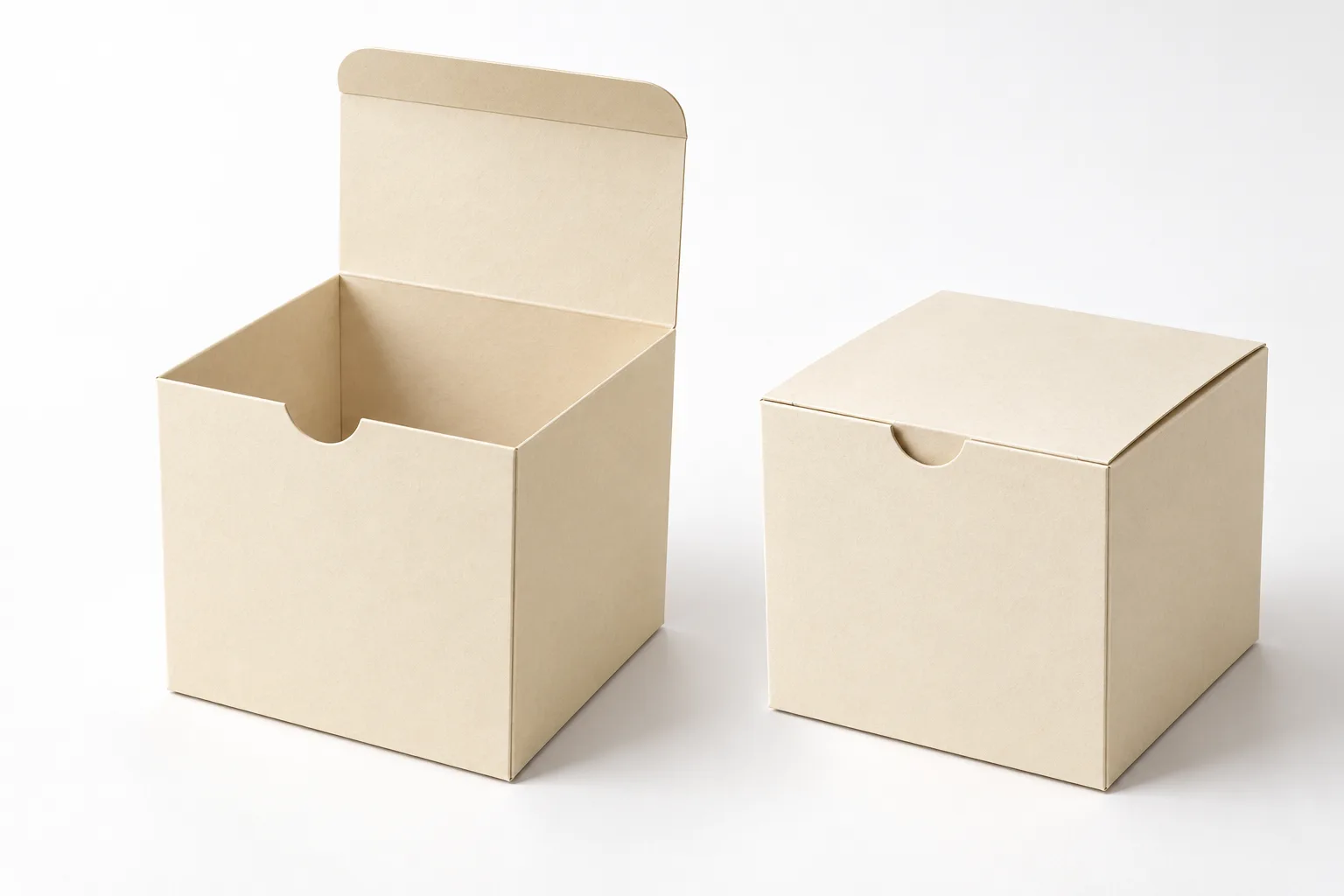
- Printed folding carton for jewellery, 1,000 to 3,000 pieces: roughly US$0.18 to US$0.65 per piece depending on board grade and finishing.
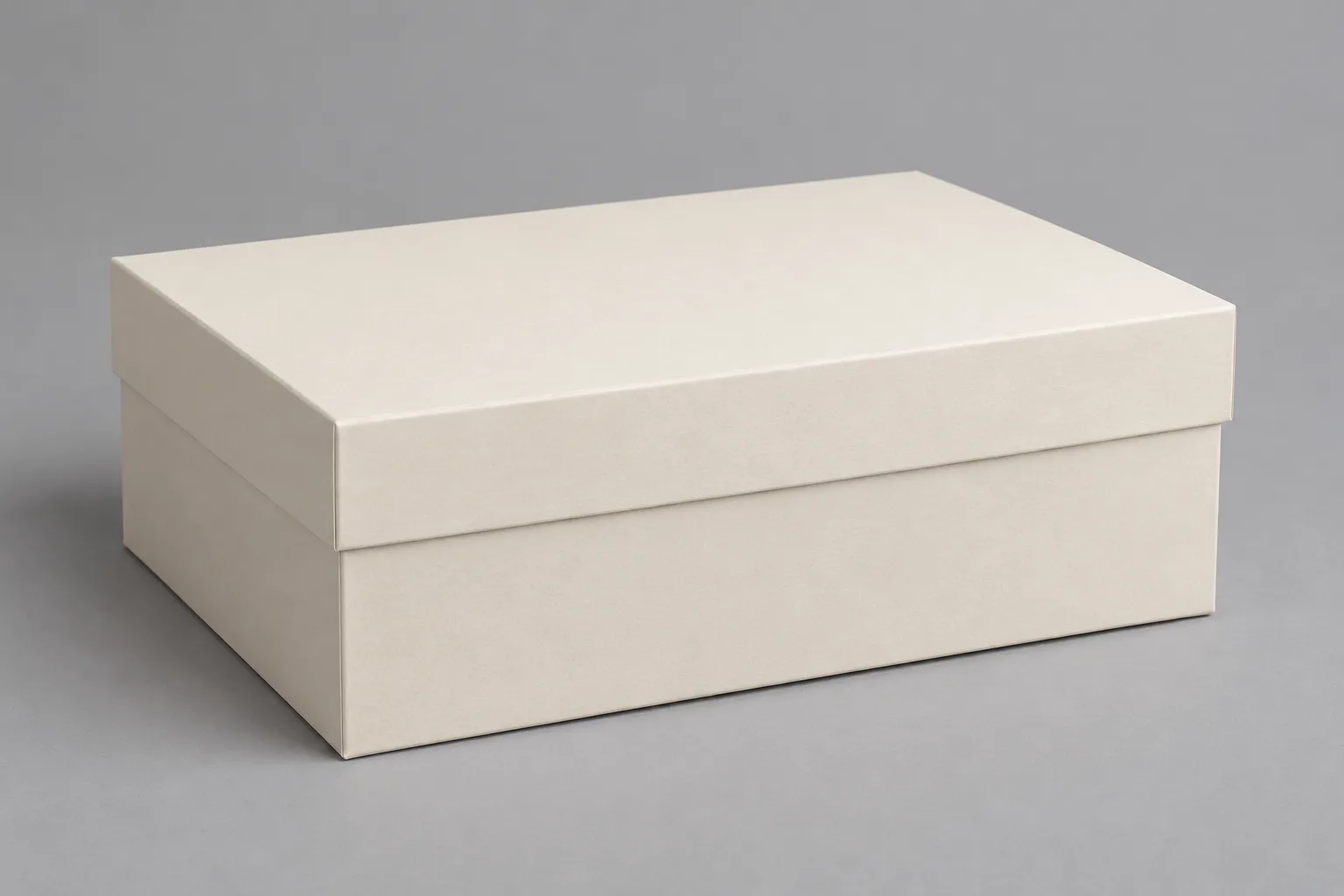
- Rigid set-up box with lid and base, 1,000 pieces: roughly US$0.65 to US$1.80 per piece; with magnetic closure add about US$0.15 to US$0.45.
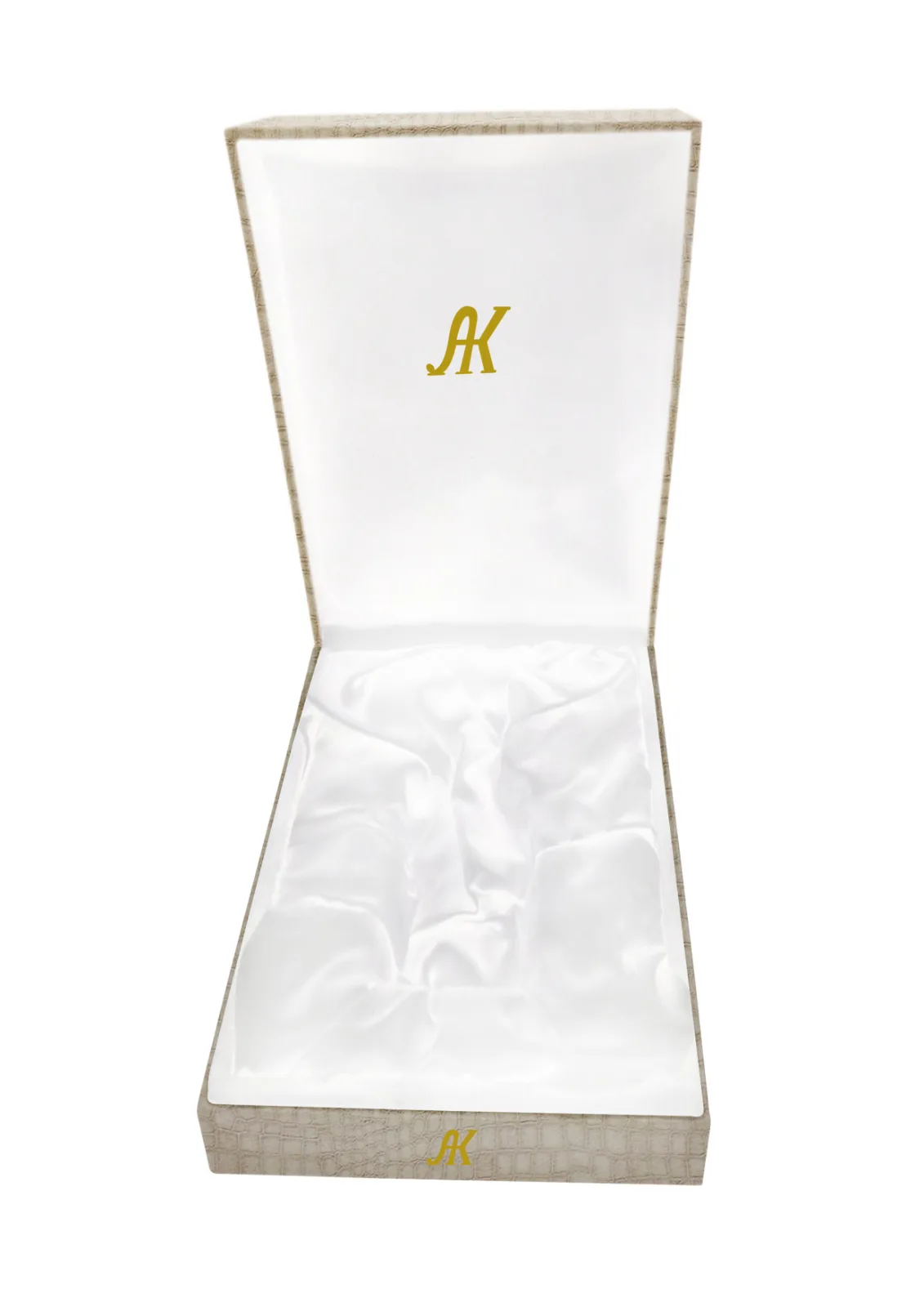
- Rigid box with foam or EVA insert, ribbon pull and foil logo, 1,000 to 2,000 pieces: commonly US$1.20 to US$3.50 per piece.
- Cutting die for a folding carton: typically US$120 to US$450 depending on size, complexity and number of ups.
- Rigid box tooling and jigs: typically US$150 to US$600 for a first run.
- Foil stamping die: about US$80 to US$200 per design.
- Structural design of a new box style: commonly US$150 to US$1,500; simple dieline adaptation is often free.
- Sample: usually US$50 to US$250 per design, frequently credited against the first bulk order.
- Minimum order: commonly 500 to 1,000 pieces for printed folding cartons, 500 to 3,000 for rigid boxes with hand finishing.
- Production lead time: 12 to 18 working days for folding cartons, 18 to 30 working days for rigid boxes after artwork approval.
- Colour tolerance on brand colours: Delta E of 2 or lower under a defined light source is a reasonable contract figure for coated stock.
- Die-cut and glue tolerance: ±0.5 mm on panel dimensions, checked against the approved pre-production sample.
- Sample approval window: 3 to 5 working days including courier for a physical pre-production sample.
Ranges are typical industry values for the material or process named and are not a specification; confirm the exact value, the current edition of each standard and the applicable grade with your supplier or test laboratory.
What actually drives the unit price
Box construction
The style sets the labour minutes. A folding carton is printed, die-cut and folded on automated lines. A rigid box is wrapped by hand: board is cut, the wrap paper is glued and turned over the edges, corners are folded and pressed, and the lid is assembled separately. Roughly 60 to 75 percent of a rigid box's cost at 1,000 pieces is material plus hand labour, not printing.
Nested styles — lid-and-base, drawer, book-style with a hinged spine — add parts and assembly steps. A magnetic closure adds two magnets, a recessed pocket and an extra folding operation, which is why it carries a visible premium rather than a rounding difference.
Board and wrap material
Inside a rigid box, greyboard of 1.2 to 2.0 mm does the structural work. On the outside, wrap paper of 128 to 157 g/m² art paper, textured stock or a specialty uncoated sheet carries the brand impression. Moving from 1.5 mm to 2.0 mm board, or from standard art paper to a textured specialty sheet, changes cost per box more than changing the foil colour does.
For folding cartons the same logic applies in reverse: an SBS (solid bleached sulphate) board of 300 to 400 g/m² prints cleanly and folds well, while a recycled board of similar caliper may cost less but needs more care on colour and crease cracking. How to Choose the Right Paper GSM for Packaging sets out the grammage bands that survive folding without cracking.
Print and finishing
Four-colour process print is the baseline. Every additional pass — spot colour, foil stamping, blind emboss, spot UV, soft-touch lamination — adds a unit, a make-ready and often a separate die. On a US$1.20 box, one foil logo and a soft-touch laminate can add 20 to 35 percent to the unit price at 1,000 pieces, and much less at 5,000 because make-ready is amortised.
Inserts
An insert protects the product and does as much for perceived value as the box itself. Die-cut EVA foam, flocked foam, moulded pulp, thermoformed PET and card platforms sit in a range from roughly US$0.15 to US$0.90 per piece at 1,000 to 3,000 pieces. A cut card platform is the cheapest way to hold a necklace; a flocked EVA tray with a ribbon pull is one of the most expensive.
Quantity and tooling amortisation
Tooling is a fixed cost. At 500 pieces a US$300 die adds US$0.60 per unit; at 5,000 pieces the same die adds US$0.06. This is the main reason quotes for the same box diverge: one supplier prices 500, another prices 5,000, and both quote a single unit price.
Is design included in the price?
Almost always partially, and the split matters when comparing quotes.
Normally included at no separate charge
- A standard dieline adapted to your dimensions, supplied as PDF, AI or DXF.
- Guidance on board grade and finishing that suits the box style.
- A plain or digitally printed white dummy for dimensional check, sometimes free, sometimes billed as a sample.
- Placement of your supplied artwork onto the dieline, with bleed and safe-area warnings.
Normally billed separately
- Structural design of a new box style, or a custom insert cavity modelled from a product drawing: commonly US$150 to US$1,500 depending on complexity and number of revisions.
- Artwork creation or redrawing of a logo into vector format.
- 3D renders for internal sign-off: often US$50 to US$300 per view set.
- Colour retouching and image work on printed panels.
- Extra physical samples beyond the first approved round.
A quote that says design is free usually means dieline adaptation only. Ask directly which of the five items above are included, and get the answer in writing before the order — this single question prevents most later disputes about "design fee" appearing on an invoice.
How a quote should be broken down
- Unit price at each quantity break (500, 1,000, 3,000, 5,000), not a single figure.
- Board and wrap specification with grammage and caliper, named grade, not just "high quality".
- Print process, number of colours, and the finishing list with foil or emboss area.
- Insert material and cavity details.
- Tooling and die costs, stated as one-time charges.
- Sample cost and whether it is credited.
- Packaging for shipment, export carton count and carton weight.
- Incoterm and named port or door, because EXW and DDP quotes for the same box differ by freight and duty.
- Lead time from artwork approval, plus the production window reserved for you.
Comparing quotes without being misled
Compare like with like: same dimensions, same board caliper, same number of foil passes, same insert, same quantity, same delivery term. Where a supplier cannot state board caliper and wrap grammage, the quote is not comparable yet.
A useful discipline is to ask for the cost of a 20 percent quantity increase. If the unit price barely moves, tooling is small relative to material and the supplier is pricing material honestly. If the unit price drops sharply, you were paying mostly for make-ready and there may be room to negotiate at higher volume.
Two references help pricing conversations stay factual: Packaging Pricing Models and Fee Structures Explained covers the fee conventions suppliers use, and How to Read a Packaging Quote: Unit Price, MOQ and Lead Time explains which lines are negotiable. For the structural side, Rigid Box Types: Cardboard Set-Up Box Styles for Premium Packs and Rigid Box Construction Explained show how many parts a style actually contains.
FAQ
How much does a custom jewellery box cost?
For 1,000 pieces, a printed folding carton is commonly US$0.18 to US$0.65, a rigid lid-and-base box US$0.65 to US$1.80, and a rigid box with foam insert, ribbon and foil US$1.20 to US$3.50. At 500 pieces expect 20 to 40 percent higher unit cost because tooling is spread over fewer units.
Does the price include design?
Usually only the dieline adaptation and artwork placement. Structural design of a new box, inserts modelled from a product drawing and 3D renders are commonly charged separately, from about US$150 to US$1,500 for structural work.
What is the minimum order for a custom gift box?
Commonly 500 to 1,000 pieces for printed folding cartons and 500 to 3,000 for rigid boxes with hand finishing. Below 500, digital print or stock sizes are usually more economical than a custom run with new tooling.
Do I pay for samples?
Yes in most cases, typically US$50 to US$250 per design including freight. Many suppliers credit the sample cost against the bulk order once it is placed, so ask whether the credit applies and at what order value.
Why do two quotes for the same box differ by 40 percent?
Usually four reasons: different board caliper or wrap grammage, different quantity breaks, tooling counted in or out, and hand-finishing steps such as ribbon and insert assembly. Ask each supplier to state caliper, grammage, tooling and quantity, then compare again.
中文速答
问:定制珠宝盒和礼品盒的价格一般是多少,包含设计费吗?
答:1000 件起订的常见区间是:印刷折叠盒约 0.18–0.65 美元/个,天地盖硬盒约 0.65–1.80 美元/个,含泡棉内衬、丝带和烫金的硬盒约 1.20–3.50 美元/个。价格主要由盒型结构、灰板厚度与裱纸克重、印刷与后道工序、内衬和起订量决定。
问:设计费包含在里面吗?
答:通常只包含刀模图(dieline)的尺寸适配和出血检查。全新盒型的结构设计、按产品图纸建模的内衬、3D 效果图一般单独收费,结构设计约 150–1500 美元;品牌平面设计由你自己的设计方完成,或另计美术服务费。
问:为什么两家报价差很多?
答:多数是四个原因:灰板厚度或裱纸克重不同、报价数量不同、开模费算没算进去、手工工序(丝带、内衬装配)是否包含。要求供应商在报价单上写明克重、厚度、模具费和数量阶梯,再比较。
问:还需要额外注意哪些一次性费用?
答:刀模 120–450 美元、烫金版 80–200 美元、硬盒夹具 150–600 美元、样品 50–250 美元(多数可抵大货款)。把这些一次性费用按订单数量均摊,才是真实的单件成本。
About this guide
Written and reviewed by the pkgoutside Editorial Team, which covers printing, packaging materials, formats and sourcing. Guides draw on supplier specifications, published industry standards and the questions buyers ask on pkgoutside. Specifications vary by supplier and market, so confirm the final material, certificates and samples with your supplier before ordering.
- Written by:
- pkgoutside Editorial Team — packaging and print sourcing coverage
- Technical review:
- Cross-checked against the standards listed below
- Figures:
- Typical ranges for the material and process described, not a specification
- Last reviewed:
- October 31, 2026
Standards & references
The figures, test methods and compliance terms cited in this guide follow the published standards below. Editions and applicability vary by material, market and supplier, so confirm the current edition and the exact grade or specification with your supplier or test laboratory before ordering.
Incoterms 2020 (ICC) — International commercial terms
Allocation of freight, duty, insurance and risk between seller and buyer.
WCO Harmonized System — Customs classification of goods
HS codes that set duty rates, documentation and clearance requirements.
ISO 2859-1 — Sampling procedures for inspection by attributes
AQL sampling plans: sample size and acceptance number per lot size.
Source: https://pkgoutside.com/insights/custom-jewellery-gift-box-pricing-design-fee · pkgoutside — printing and packaging B2B marketplace. Export or archive this copy together with the URL above so readers can trace the original guide and its current version.
Related reading: Can Food-Grade Paper Bags Go in the Microwave? What Coatings, Inks and Linings Allow, How to Fold and Store Paper Shopping Bags So They Take Up Less Space, Branded Folding Cartons: The Fastest Realistic Lead Time From Artwork to Delivery
More guides

Can Food-Grade Paper Bags Go in the Microwave? What Coatings, Inks and Linings Allow

How to Fold and Store Paper Shopping Bags So They Take Up Less Space

Branded Folding Cartons: The Fastest Realistic Lead Time From Artwork to Delivery
More in Pricing & Cost Structures
View all in Pricing & Cost Structures
Total Landed Cost for Packaging: Freight, Duty and Storage
Why unit price is only part of packaging cost: freight, duty, packing method, storage and the cost of holding stock.
By pkgoutside Editorial TeamUpdated October 24, 2026
Packaging Pricing Models and Fee Structures Explained
How packaging is priced: tooling and die charges, plate fees, MOQ price bands, sampling, freight and payment terms explained in plain terms.
By pkgoutside Editorial TeamUpdated October 24, 2026